We use cookies to make your experience better. To comply with the new e-Privacy directive, we need to ask for your consent to set the cookies. Learn more.






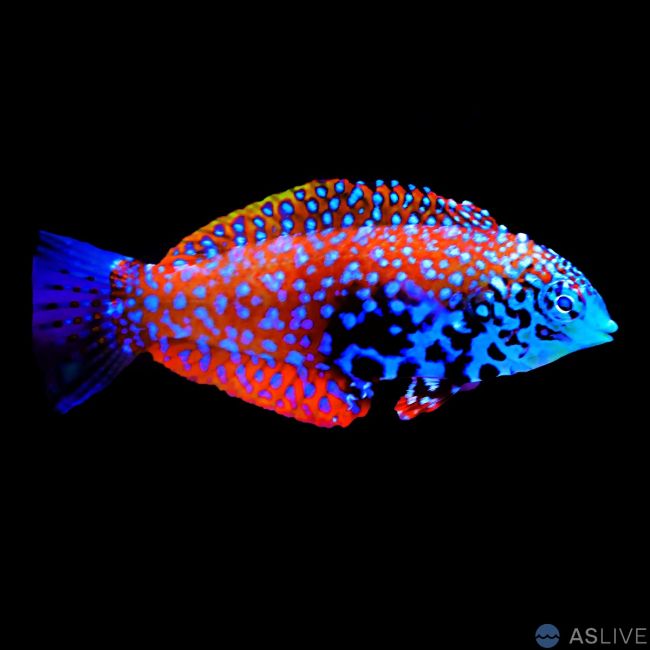
Blue Star Leopard Wrasse (Macropharyngodon bipartitus)
SKU
ASL-BSL-WRASSE
$69.99
Local Pickup Only

Local Pickup Only on this fish. Call for availability or to make a deposit on this fish.
Description
The Blue Star Leopard Wrasse (Macropharyngodon bipartitus), also known as the Divided Leopard Wrasse, is a striking marine fish admired for its vibrant coloration and intricate patterns. Native to the Indo-Pacific region, particularly around the reefs of the Western Indian Ocean, this species is distinguished by its iridescent blue spots scattered across a dark background, with females often displaying a more vibrant color palette than males. The species typically reaches a maximum size of about 5 inches (12.7 cm) in length.
Habitat and Behavior
In the wild, the Blue Star Leopard Wrasse inhabits coral reefs and sandy lagoon areas at depths ranging from 3 to 30 meters. They are diurnal, actively foraging during daylight hours and burying themselves in the substrate to sleep at night or when threatened. These wrasses are carnivorous, primarily feeding on benthic invertebrates, small crustaceans, and mollusks.
Care in Captivity
The Blue Star Leopard Wrasse is best suited for well-established marine aquariums that mimic its natural habitat. A minimum tank size of 75 gallons is recommended, with ample live rock formations and a sandy substrate to accommodate their burrowing behavior. The water parameters should be maintained within a temperature range of 72-78°F (22-25.5°C), a pH of 8.1-8.4, and specific gravity of 1.020-1.025.
Why They Are Expert-Only Fish
Feeding Challenges: Blue Star Leopard Wrasses are notoriously finicky eaters, often requiring live food such as copepods and amphipods, especially when first introduced to the aquarium. Transitioning them to frozen or prepared foods can be difficult and demands patience and experience.
Delicate Acclimation: These fish are highly sensitive to changes in water quality and require a slow and careful acclimation process. Sudden shifts in water parameters can lead to stress and subsequent health issues, making them less resilient compared to other marine fish.
Disease Susceptibility: Blue Star Leopard Wrasses are prone to common marine diseases such as Marine Ich (Cryptocaryon irritans) and Velvet (Amyloodinium ocellatum). Their sensitivity to medications necessitates precise and expert handling to avoid adverse reactions.
Behavioral Needs: Providing an environment that caters to their natural behavior is essential. They need plenty of hiding spots and a substrate deep enough for burrowing. Inadequate tank conditions can lead to stress, aggression, and a shortened lifespan.
Compatibility: These wrasses can be territorial, especially towards other wrasses. Ensuring proper tank mates and managing social dynamics within the aquarium requires experience to avoid conflicts and stress.
Due to these factors, the Blue Star Leopard Wrasse is best suited for advanced aquarists who have the knowledge and resources to meet their specific needs. Proper care and attention can result in a thriving, visually stunning addition to a marine aquarium.
| Manufacturer | Aquarium Specialty |
|---|
Write Your Own Review
MANUAL
No
Related Products
Check items to add to the cart or
-

-

-

-

-
 Royal Exclusiv Bubble King Deluxe External Complete PumpStarting at: $845.99